May 12, 2016

Stockholm, 2016

Image: kstudio on Freepik

The email is open on my screen, looking like a joke I’m not supposed to get. At the top, the college crest I’ve always dreamed of. The header is crisp, the message is clear: I made it. I can almost smell the cold air of a city I’ve only seen in pictures. Stockholm. The only thing I’ve wanted since high school.

God. The blue light feels too bright in this dark room. I spend years romanticizing the "escape," convinced that a plane ticket to Sweden will finally fix the person I am becoming.

Then I hear him in the other room.

The man who taught me how to speak is currently arguing with a ghost in the mirror. 2015 was the stroke and the dementia. He is running out of words, and today, my name doesn’t make the cut. People love to talk about "ambition" like it exists in a vacuum. But hustle is a luxury for people with healthy parents. For the rest of us, "winning" is just another word for abandonment.

I’m not a martyr. But an anchor.

I close the tab and shove the laptop away into a pile of textbooks. All that expensive paper—it’s just trash now. I look at the door. I’m not going anywhere. Just back to where I’ve always been.

I don’t tell anyone. I’ll let them think I have no plans. I’m the youngest, the last one left in the house. I’m the one who has to stop living. My dreams are just stories no one cares about. I can’t leave them like this, even if staying means I have to kill my own future.

No, it doesn't feel like a sacrifice. There is no pride in it. Just a heavy, hollow thud in my gut.

So I’m staying. Not because I’m a "good person," but because I can’t live with the silence if I leave. I am an anchor that has stayed underwater for too long. I’m not holding the ship anymore; I’m just becoming part of the seabed. And maybe that’s the most honest thing I’ve felt in years.
Share:

Apr 26, 2016

Staring Emptily into the Distance

I was wondering what you were thinking, Ken?
Share:

Apr 22, 2016

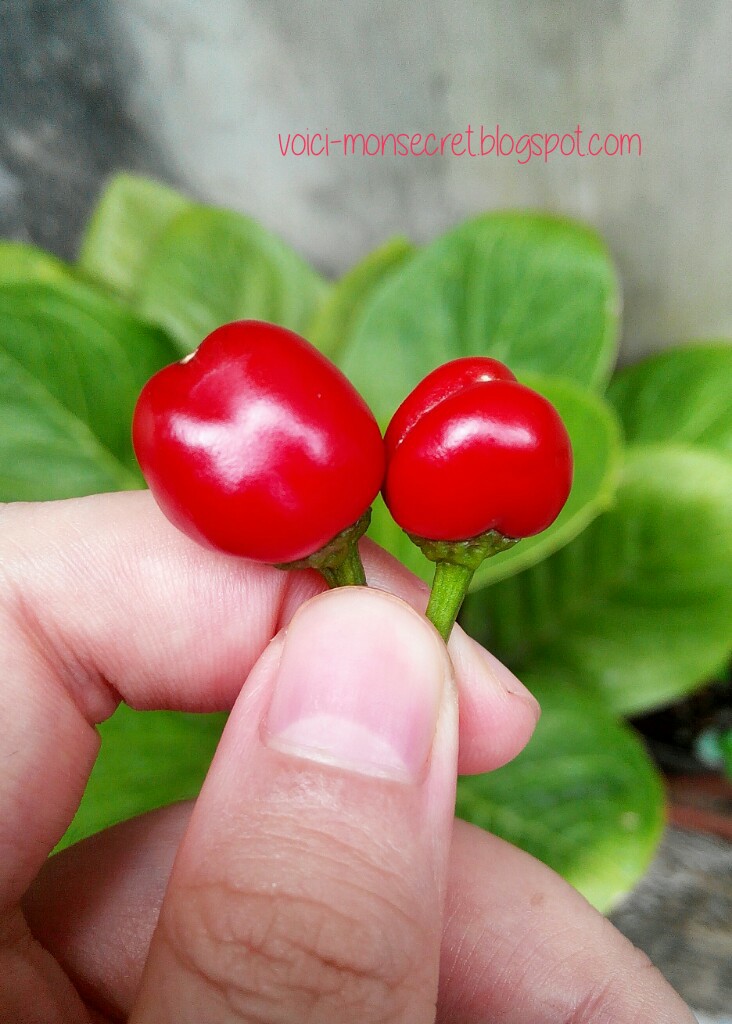
Red, Ripe Bolivian Rainbow Peppers

Cutie!

Share:

Jan 26, 2016

Mengenal Chaya: Si Pepaya Jepang yang Sebenarnya Bukan Pepaya


Update – November 2017

Setelah dua tahun tidak lagi menanamnya, barulah saya tahu kebenaran tentang tanaman ini. Agak lucu juga, ternyata selama ini saya ikut salah sebut.
Mei lalu, seorang teman pena membaca tulisan ini dan memberikan info sekaligus mengoreksi saya. Akhirnya, misteri nama asli tanaman ini terjawab. Alhamdulillah, ya.

Kilas Balik 2015: Perkenalan Pertama

Akhir 2015, saya dibawakan sepuluh batang tanaman yang dikenal sebagai daun pepaya jepang. Daunnya mirip pepaya biasa (Carica papaya), tapi ukurannya lebih kecil. 

Soal rasa? Sama sekali tidak pahit. 
Cocok sekali untuk campuran tumis ikan teri, direbus sebagai lalapan, atau dibuat sayur urap. Mirip daun singkong, tapi versi juara. Teksturnya lebih renyah, empuk, dan tidak alot. 

Ibu saya, entah kenapa, nekat menyeteknya. Batang dipotong sepanjang 30 cm, lalu ditancapkan ke pot. Jujur saja, awalnya saya skeptis. Dalam kepala saya waktu itu: mana mungkin pepaya tumbuh dari stek batang? Tapi seminggu kemudian, tunas baru mulai muncul. Tiga minggu? Daunnya sudah rimbun, hijau muda, dan terlihat segar.

Pengalaman Pribadi Menanam Chaya di Pot

Meskipun batang terlihat langsing, chaya kokoh dan daunnya cukup rimbun. Karena ditanam di pot dan sering dipangkas, tinggi tanaman tetap terkontrol. Rasanya menyenangkan deh bisa memanen sendiri, seperti dapat hadiah kecil dari tanaman yang kita rawat diam-diam.

Menurut pengalaman saya, chaya tidak butuh perawatan khusus:
  • Ketahanan: Tahan cuaca panas maupun hujan. Saya jarang menjumpai hama. Tapi kalau hujan terus-menerus, satu pot saya pernah busuk. Pelajaran penting: jangan terlalu banyak air di awal penanaman.
  • Penyiraman: Cukup dua kali sehari saat cuaca terik.
  • Pemupukan: Pupuk kandang atau pupuk lepas lambat (slow release fertilizer) seperti NPK sebulan sekali, dosis menyesuaikan ukuran pot.
  • Masa Panen: 1,5 bulan setelah stek, daun sudah bisa dipetik. Selanjutnya bisa dipanen setiap bulan.
Hati-hati Getah: Saat panen, jangan sampai terkena getahnya karena bisa memicu rasa perih dan gatal, terutama pada kulit sensitif. Cukup cuci dengan sabun, dan rasa gatalnya akan berangsur hilang.

Stek pepaya jepang di pot. Satu pot sempat mati karena busuk akibat hujan yang datang terus-menerus

Meluruskan Salah Kaprah soal “Pepaya Jepang”

Waktu itu, info tentang tanaman ini masih sangat langka. Jadi wajar kalau saya, dan mungkin banyak orang lain, ikut salah kaprah. Nama asli tanaman ini adalah chaya, atau bayam pohon (Tree Spinach). Nama ilmiahnya cukup bikin dahi berkerut: Cnidoscolus aconitifolius.

Chaya, yang di Indonesia lebih dikenal sebagai pepaya jepang, nyatanya bukan pepaya dan jelas bukan dari Jepang. Nama itu kemungkinan hanya trik pasar supaya terdengar eksotis. Mirip kasus pepaya bangkok atau california yang sebenarnya hasil pemuliaan dosen IPB, tapi sering dilabeli impor. Kita memang sering terjebak label, bukan?

Chaya berasal dari Semenanjung Yucatán, Meksiko, dan sudah menjadi makanan favorit bangsa Maya selama berabad-abad. Tanaman ini adalah semak menahun yang tumbuh cepat dan besar.

Menariknya, Chaya punya beberapa subspesies.
  • Chaya Brava: tumbuh liar, duri halus
  • Chaya Mansa: dibudidayakan tanpa duri
Grup kultivar Chayamansa dibagi lagi menjadi empat jenis berdasarkan bentuk daun: Chayamansa, Estrella, Picuda, dan Redonda. Sepertinya yang saya tanam adalah kultivar ‘Picuda’, makanya bentuk daun yang kita temui kadang berbeda.

Chaya berkerabat dekat dengan singkong (Manihot) dan jarak pagar (Jatropha), semuanya dalam keluarga Euphorbiaceae. Jadi wajar kalau batangnya mengeluarkan getah putih yang agak menyengat. Kalau memanen atau memangkas, sarung tangan wajib dipakai ya!

Chaya di pot yang lebih besar.

Nutrisi dan Keamanan

Daun chaya sering disebut superfood. Kandungan zat besinya lebih tinggi dibanding bayam, serta kaya kalium, kalsium, dan vitamin A. Banyak yang percaya chaya membantu melancarkan sirkulasi darah, menjaga kolesterol, dan punya segudang manfaat lainnya.

Namun, seperti singkong, daun chaya mengandung glikosida sianogenik yang bersifat racun.

Cara Mengolah Chaya yang Benar

  • Rebus minimal 5–20 menit agar racun menguap.
  • Jangan gunakan panci aluminium karena bisa memicu reaksi beracun dan menyebabkan diare.
  • Rebus tanpa menutup panci agar gas HCN bisa keluar, dan hindari menghirup uapnya.
Air rebusannya sering disebut menyehatkan karena kaya vitamin C. Jika masih ragu soal sisa toksin, tidak ada salahnya memilih untuk tidak mengonsumsinya.

Inspirasi Menu Chaya

Selain menu Indonesia, daun chaya bisa diolah menjadi banyak hidangan: sup, sayur, nasi goreng, pasta spageti, salad, lasagna, hingga pizza. Chaya juga bisa dijadikan minuman seperti teh, jus, atau smoothie. Karena masih ada silang pendapat soal aman atau tidaknya dikonsumsi mentah, jadi memang sebaiknya daun direbus dulu.

Bunga chaya

Panduan Lengkap Propagasi (Cara Menanam)

Chaya tidak menghasilkan biji atau buah. Ia biasanya hanya berbunga putih yang berubah menjadi polong (seed pod), lalu rontok dengan sendirinya. Pembiakan hanya bisa dilakukan melalui stek batang:
  • Media Tanam: Stek batang sepanjang 15–60 cm di pot atau tanah. Buang semua daunnya, siram teratur.
  • Drainase: Jangan terlalu basah, batang stek sangat rentan busuk.
  • Lingkungan: Suka sinar matahari penuh, tumbuh optimal di temperatur 25°C ke atas, ketinggian 0–1000 mdpl.
  • Kondisi Tanah: Bisa tumbuh di segala jenis tanah. Pupuk opsional, tapi daun akan lebih lebat jika diberi pupuk.
  • Jarak Tanam: 1–2 meter jika di lahan terbuka; jika ingin sebagai pagar hidup, cukup 1 meter antar tanaman.
Chaya bisa tumbuh sampai 6 meter, tapi mesti rajin dipangkas di bawah 2 meter agar tetap setinggi manusia dan mudah dipanen.

Sekarang daun chaya mudah ditemukan di pasar tradisional dengan harga terjangkau. Bibitnya pun banyak dijual online. Coba tanam di rumah, selain untuk sayuran, juga cantik sebagai pagar hidup.

Itulah sedikit cerita dan pengalaman saya menanam chaya, tanaman yang selama ini kita kenal sebagai “pepaya jepang”, padahal bukan pepaya, dan jelas bukan dari Jepang, ya!

Buat saya pribadi, chaya bukan cuma soal nama atau kandungan gizinya, tapi soal pengalaman kecil di rumah: menyetek batang, menunggu daun pertama muncul, lalu memanennya untuk dimasak bersama keluarga.

Kalau kamu pernah menanam atau mengolah chaya dengan cara yang berbeda, silakan berbagi di kolom komentar. Siapa tahu, dari cerita-cerita kecil seperti ini, kita bisa mengenal tanaman di sekitar kita dengan cara yang lebih dekat ☺
Share:

Jan 5, 2016

Eleanor & Park by Rainbow Rowell


​Everyone was talking about Eleanor & Park back in 2013. In bookstores or online, it was one of those books you just couldn’t ignore. It was my first Rainbow Rowell read, and I was trying to find what the hype was about, only to find nothing. I remember picking it up and putting it down again and again, forcing myself to keep going. It took me almost two months to finish. The spark never came. I was more bored than moved.

Here we have Eleanor and Park who are said not like your typical young adult romantic interests. Eleanor is written to be this "different" girl, but the way she’s described feels incredibly lazy. Rowell treats the red hair, the weird clothes, and the poverty like personality traits rather than actual life circumstances. Even the constant threat of violence in her home is used as a narrative shorthand to make her look "edgy" rather than actually exploring how that trauma shapes her. This is pity bait at its finest. This low-effort writing extends to her family, too; her mom is barely there and her siblings only exist as props to make Eleanor’s life look even more miserable. She lacks a soul outside of her own misery because Rowell is so busy making sure she’s a caricature of a victim that she forgets to let her just be human. Eleanor is a walking pile of sad tropes designed to force the reader's sympathy.

Park's storyline quickly fell into uncomfortable stereotypes. He's a half-Korean kid in 80s Midwest, but calling him "Park"—literally a common surname used as a first name—feels like Rowell just picked a random word from a "Korean 101" list and stopped there. She just used it as a marker to say 'look, he's different,' and then did nothing else with it. In a story about heritage, this choice is never explored, much like how Rowell reduces him to clichés like being good at math and doing "taekwando" (which she misspelled taekwondo fourteen times). It makes Eleanor's gaze feel even more like fetishization. She treats his Asian features like some "exotic" ornament rather than a person.

Set in the author's hometown in 1986 Nebraska, this book throws a bunch of 80s references at us. The Walkman, the tapes, the comics, the music. Throwing in all those details feels like a desperate attempt to build an atmosphere, but none of it adds any depth. Rowell was basically name-dropping bands and songs to make it look vintage, but you could take all those references out and the story wouldn't change at all. It’s just an aesthetic choice that never actually becomes part of the story.

What’s even more messed up is how the book shifts between moods. One minute we're in the middle of a nightmare at Eleanor’s house, with the abuse and the constant fear of Richie, and the next we're expected to gush over them holding hands on the bus. Rowell shouldn't be using a girl's trauma just to make us care more about a high school romance. It's cheap. She’s using Richie’s abuse to give the story some 'edge' without actually doing the work.

The dual POV was a mess. The constant POV jumps became more annoying as the plot stalled, and I couldn't buy their voices at all. Eleanor's inner monologue felt like an adult trying way too hard to sound like a quirky troubled teen girl. Even their conversations were painfully awkward. Not in a cute way, but the kind that is hard to get through. At one point, Park asks if it was possible to rape somebody's hand. Then you have Eleanor telling him he makes her feel like a cannibal. 

And the peak of it all:
That’s how good it felt. She was like one of those dogs who’ve tasted human blood and can’t stop biting. A walrus who’s tasted human blood.

Yup. Eating each other's faces.

By the last third, I was completely done. All that back-and-forth and them not being able to communicate was just a flimsy excuse to stretch the story. I stopped caring if they stayed together. Whatever they had, it wasn't love. Just two kids being intense and weird for no reason. Finishing it was a total drag.

I appreciate that Rowell tried to include diversity, but it’s clear she didn’t bother doing any actual research. You can't just throw in a mixed-race character for the sake of "diversity" and then fill their entire existence with vague assumptions. It’s sloppy songwriting in book form. Even Park’s mom is left as a one-dimensional prop. Rowell traps her in a thick accent and broken English, yet never gives her a voice. Despite her history as a woman brought from Korea after the war, she never shares a single story or perspective from her past—as if her identity was completely erased the moment she stepped into Nebraska. She exists as a flat caricature for the white gaze; an accent, not a human being with a memory.

Culture isn’t an accessory. It shouldn’t be some decoration you just throw in to make a romance feel "interesting." I keep thinking about authors like Gene Luen Yang or Jhumpa Lahiri—their characters actually have a life. Identity is the engine there, not just some label for people to stare at. Rowell’s attempt is paper-thin; she’s going through the motions without actually caring. If you’re going to write about a community that isn't yours, at least do the work. Research, respect, or something. Don't just slap on some recycled "exotic" labels and call it a day.

Rowell isn’t the only one doing this. You see the same thing in Twilight or The Mortal Instruments where the love interest is treated as "exotic." But it feels way worse when it’s a real-world POC character. A romance only works if there’s a balanced POV and actual spine, and Eleanor & Park has none of that. It ends up being demeaning and harmful.

I’ll give it one thing, though. The book does catch that shaky feeling of having your first real crush. That part where every little touch feels way too intense. I almost liked it for a second. But a few decent pages can’t save a story filled with shallow characters and cringey dialogue. The ending left me feeling empty. I don't see it as some deep open ending; the author just ran out of things to say. I really don't get the hype. There’s no deeper meaning here, just a lot of cheesy clichés that made me cringe. I wouldn’t recommend this to anyone, not even for curiosity's sake. It’s not worth the energy.
Share:

Nov 1, 2015

On Being the Punchline

Image: Studi4rt on Freepik
Image: Studio4art on Freepik


I never really understood bullying until it happened to me. If my posts here often feel heavy or bleak, thisis why. Now that I’ve graduated and left those halls behind, it finally feels safe to speak my truth.

My first year at university was peaceful. No drama, no enemies. I just existed. But everything changed in my second year. I had to retake classes and found myself a sophomore among freshmen who saw my struggle as a joke. To them, I was just the "stupid senior" who couldn't keep up. That was the beginning of it.

Then, they started on my name. A name my parents gave me with love, borrowed from a sacred place, reduced to a joke for their entertainment. Every time I stepped into the classroom, the juniors laughed.

The real betrayal followed me home, onto my screen. My so-called friend joined those juniors in mocking me on social media, turning my struggles into amusement. Did it ever cross their minds that while they laughed, I was fighting every single day just to survive? What feels like a simple walk to them was a mountain I was already bleeding on. I had to climb it alone. And no one noticed, just because survival doesn’t always look like collapse.

One or two friends truly stood by me. The rest chose distance. They called it a “small issue” and urged me to make peace. Not out of malice, but because comfort was easier than confrontation. I learned to pull away. I chose quiet over being misunderstood. Perhaps, they began to see me through the same lens as the ones who bullied me. As if I were already a failure. I wasn’t pushed away; I simply learned that I no longer belonged.

Maybe it seemed trivial to them. Just jokes. But for me, the impact was seismic. I spent years dissecting myself: Am I really this stupid? Is my identity truly that comical? I fell into a depression, haunted by their laughter while they paraded their "achievements" and hollow accolades. Bitterly ironic that a prestigious university didn’t guarantee even basic human decency.

The mockery was one thing. The stolen time was another. While I was struggling to stay afloat, they were building their futures. I was left behind, picking up the pieces of myself from a war I never asked for.

I’ve made peace with them now, acting as if nothing happened. It seems the performance of normalcy is enough for them. I have forgiven them, truly. But I’ll leave the rest to the One who knows everything. Some debts are just not for me to clear.

Share:

Featured Post

On Being the Punchline

Image: Studio4art on Freepik I never really understood bullying until it happened to me. If my posts here often feel heavy or bleak, thisis...